Wednesday, January 30, 2013

Norah Head

Streaked Shearwater
Standing on the dock in miserable weather before a Pelagic trip, birders often reassure each other with the aphorism "The worse the weather, the better the birds". Well the weather could not have been worse this past weekend, and the birds were excellent.

At Norah Head on the Central Coast a female and a juvenile Lesser Frigatebird, two Streaked Shearwater, three Bullers Shearwater, large numbers of Fluttering Shearwater, 4 Short-tailed Shearwater, thousands of Wedge-tailed Shearwater, groups of Sooty Terns totalling around 100 birds, three Australian Gannet, and six Little Tern.

Watchers at Nobby's saw similar birds, as well as a White-necked Petrel and a Tahiti Petrel. At Mistral Point, Maroubra, four Long-tailed Jaegers were also seen, while at Port Macquarie they added a Brown Booby and Arctic Jaegers to the list. Black Noddy and Common Noddy were seen at a couple of loacations. Thirty Bridled Tern and a Roseate Tern were observed at Flat Rock East Ballina, both sightings to be reported to ORAC.

While many of these birds were far out to sea, good numbers were in close, even flying over the coastal roads and circling the parking lots.


Sunday, January 27, 2013

Tuggerah Wetlands

Red-kneed Dotterel
The Central Coast Group of Birding NSW  visited McPherson Road Swamp and Pioneer Dairy yesterday. Arriving at the swamp there were Dollar Birds perched on the wires and two Whipbirds wresting on the ground under dense shrubs. Golden-headed Cisticolas and Tawny Grassbirds called from the reeds, and Superb Fairywrens scolded from the bushes along the track.

Tawny Grassbird
A resident in one of the houses overlooking the water had a bird feeder on the fence, which had attracted numbers of Chestnut-breasted Manikin and Red-browed Finch.

Chestnut-breasted Manikin
Cattle Egret,  Eastern Great Egret and an Intermediate Egret fished along the shore. Amongst the more common ducks was a Hardhead, but sign of the Pink-eared Duck sighted there recently.

Hardhead
We flushed three Brown Quail, and watched two Latham's Snipe take off from nearby for safer locations on the far side of the water. Several Black-fronted Dotterel were content to stay put.

Latham's Snipe
Black-fronted Dotterel
At Pioneer Dairy there were good numbers of ibis, spoonbills, egrets, moorhens, swamp hens and ducks. Channel-billed Cuckoos and Figbirds flew to and from the giant fig trees. Raptors included Australian Kestrel and White-bellied Sea Eagle. A lone Australian Pipit his in the grass. Perhaps the 'bird of the day' was a substantial flock of Plumed Whistling Duck.


Thursday, January 24, 2013

San Diego Botanic Gardens

Ruby-crowned Kinglet
Family or group vacations are usually fraught with indecision and guilt for birdwatchers - how do you get away for a few hours on your own, how do you explain the attraction, and how do you compensate for abandoning the group?

Canyon Towhee
Staying with my son in Orange County, he came up with the perfect compromise. He usually goes on a lengthy cycle ride when he has a free weekend, and suggested that I drive to a birding location somewhere in a 80 to 100 mile radius, and he would ride. That gave me several hours to bird, before we met up for lunch and travelled home together in the car. The first of these outings was to the San Diego Botanic Gardens, in Encinitas, CA. While it is relatively small, there trails offer about four miles of walking and the diverse topography allows for distinct ecosystems from desert to coastal sage, to rainforest.

It was great to see a hummingbird in the Australian Garden - I've planted a large number of hummingbird attracting plants in my Toukley garden without attracting a single one! But the highlight for me was watching a tiny inconspicuous brown bird for some time, and then seeing its suprising red crest when a second bird flew into the tree, a Ruby-crowned Kinglet.

Black Phoebe

Bush Tit

White-crowned Sparrow

Succulent Mariachi Band

Allen's Hummingbird in a Banksia
Orange-crowned Warbler

Bird List

Tuesday, January 22, 2013

Stone the crows!

Australian Raven Corvus coronoides
I was watching a group of birds playing what seemed to be a special bird game in the samphire on Ash Island when a car pulled up beside me and the driver asked "You watching the ravens?" - immediately identifying himself as a serious birder. For to the general public in Australia all big black birds are crows. There are three species of raven in Australia, and two resident crows, but to give Joe Public his due it is not always easy to tell them apart, and Joe can be forgiven for giving up and just calling them all crows.

In general the ravens are bigger than crows, except that the Torresian Crow is bigger than the Little Raven. Ravens have throat hackles and crows don't, although the Forest Raven's hackles are so slight as to be unnoticeable. The Little Crow and the Forest Raven have deep baritone calls, the Australian Raven a more high pitched note ending in a mournful wail. All of them have brown eyes in their first year and white eyes on maturity. The Australian Raven doesn't exhibit wing flicking while calling, but then nor do the Torresian Crow or Little Crow, while the Little Raven and Forest Raven do. Ravens have grey bases to their feathers, while crows have white bases - except if they are juveniles, in which case they will have grey bases like the ravens.

Stone the crows!


Looking up the origin of the phrase 'stone the crows', American references suggest it is an old English phrase, while English references describe it as an Americanism. However the earliest published uses of the saying are Australian in origin, and as an expression of suprise tinged with annoyance it has an Aussie vibe. In Lennie Lower's Here's Luck published in 1930:
"I told Stanley that you had been thrown out and asked him to pull up, but he merely laughed and refused," he explained. "Stone the crows!" exclaimed Stanley indignantly.


  • Australian Raven (Corvus coronoides)
  • Little Raven (Corvus mellori)
  • Forest Raven (Corvus tasmanicus)
  • Torresian Crow (Corvus orru)
  • Little Crow (Corvus bennetti)
  • House Crow (Corvus splendens) There is an official policy of exterminating this Asian stowaway.

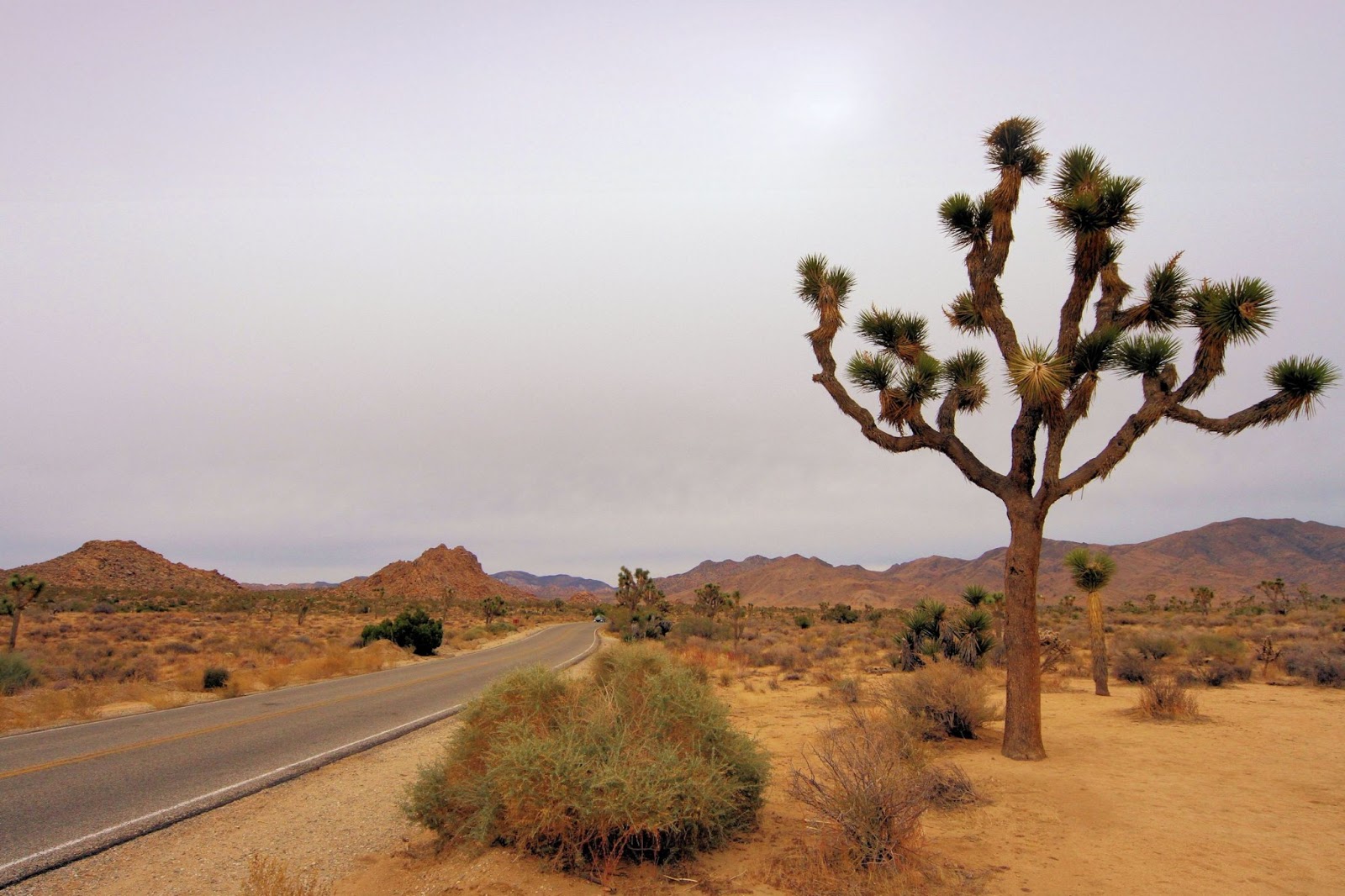
Joshua Tree


In November last year I had some time in California for a conference and got a chance to do a little bird-wandering between papers, but no time to write about it. Coming back to end-of-semester marking and admin, and then Christmas .... well long story short, I'm just now adding the trip to my blog.

The Joshua Tree National Park is a desert reserve east of LA, covering part of the Colorado Desert ( a western extension of the vast Sonoran Desert; the southern edge of the Mojave Desert; and the little San Bernadino mountains - three distinctly different ecosystems. The park straddles the Pacific Flyway and its springs provide rare watering holes, so is a popular spot for birders in spring and autumn. The tree for which the park is named is Yucca brevifolia, which looks like an escapee from a Dr Seuss book.


The Loggerhead Shrike looks a bit like our Butcherbird and in an example of convergent evolution has a similar habit of impaling its prey on twigs in a larder tree.


The rocky outcrops make the park popular with climbers, and  in the sparsely treed areas, form a convenient perch for raptors including this Red-tailed Hawk.

I saw the two birds I had especially hoped to see, the Greater Roadrunner and the California Quail, but both ground-dwelling birds were scattered by approaching groups and I managed only blurred images of their rapidly retreating backs.

Sunday, January 20, 2013

Wee Jasper - Yass Road


Headed home from Wee Jasper towards Yass, this Wedge-tailed Eagle flew low across the road in front of me, a White-faced Heron dangling from its talons, and landed in a tree some distance from the road.

The Wedge-tailed eagle is Australia's largest bird of prey and one of the largest eagles in the world, with females weighing up to 5.3 kilos and having a wingspan of 2.5 meters. Females are generally larger than males. Their diet reflects available prey, with rabbits being the primary food source in most parts of their range. Under ideal conditions they can lift 50% of their body weight.

They have been known to attack paragliders, but as far as I know have not carried any off.

Thursday, January 17, 2013

Carey's Reserve


Carey's Reserve looks a little bleak with this end of the Burrunjuck Dam completely dry, and sheep ignoring fences in the search for new grass. But the grass seed supports a colony of finches including Double-barred and these Diamond Firetails.


Australian Pipits foraged along the roadside and Dusky Woodswallows hawked for insects.