 |
| Red-kneed Dotterel |
 |
| Tawny Grassbird |
 |
| Chestnut-breasted Manikin |
 |
| Hardhead |
 |
| Latham's Snipe |
 |
| Black-fronted Dotterel |

|
| Red-kneed Dotterel |
|
| Tawny Grassbird |
|
| Chestnut-breasted Manikin |
|
| Hardhead |
|
| Latham's Snipe |
|
| Black-fronted Dotterel |

On my way back to Uni at lunchtime I stopped in at Nourish at the wetlands to kill two birds with one stone – if that is not an inappropriate expression to use here. While the facilities for humans continue to improve, and it is a very pleasant lunch spot for anyone wishing to re-charge before the afternoon onslaught, it seems to now be primarily a refuge for Australian White Ibis. The stupid birds took to the air in vast noisy flocks as I approached within 200m taking with them the birds I was hoping to see.
There were good numbers of ducks, including:

Hardhead

Pacific Black Duck

Wandering Whistling ducks and Chestnut Teal

Dusky Moorhen

Magpie Geese

Buff-banded Rail

White-breasted Woodswallow

Freckled Duck

Australian Ibis

Australian Darter
Lots of babies and young birds at the Hunter Wetlands Centre yesterday. Good to spend a day outdoors – we did have to wait out a few showers in the hides but it was ‘fine’ for the most part.
Horrific stories of the floods in Queensland on the news. The impact on people and their property is devastating, but many of our native animals will also be impacted. Many species will have found higher ground but ground-dwelling fauna such as reptiles and small mammals, particularly those living in burrows along the rivers may not have survived. The effects will be long term: vast tracts of riparian vegetation have been submerged or swept away, floodplains will be covered with silt, trees have been dislodged and fallen timber swept downstream. However for the birds and animals that survive the flooding, the water does bring with it a number of positive effects. Conditions can be better than before with water channels flushed and opened up, seeds dispersed, and habitats opened up.
In 1974 we were living and working in Brisbane, in flood affected areas of Milton, St Lucia and Indooroopilly, so my thoughts are very much with the people who are dealing with the 2011 floods.


Dusky Moorhen

Hardhead
 Magpie Goose

The University is on what was originally part of the extensive Hunter River Estuary wetlands, and still retains ponds and swamps, which after the month of rain are brimming with water and full of overflow birds from the Hunter Wetlands Centre on the other side of Sandgate Road.
The swamps are the source of the giant mosquitoes that terrorise visitors and new students but they also make for a wonderful campus environment with pleasant lunchtime walks – fully coated in repellent, of course.


Indecision - “I’ll land here, no I won’t, yes I will, no I won’t”

Duck!

He seemed to be managing OK with half his top beak missing.


I took my sandwich to Blackbutt Reserve and enjoyed some rare sunshine for an hour, before heading back to work. It was nice to have birds approaching me, rather than flying away too :-)
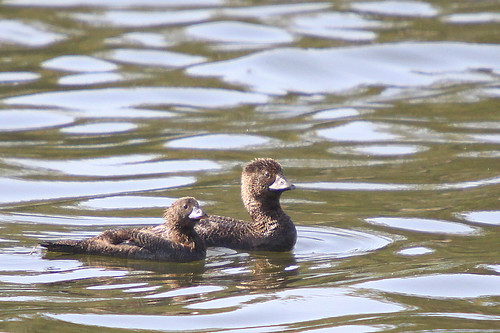 Not a lot is known about Musk Duck's breeding habits. The breeding season varies with rainfall and waterlevels, but is typically between July and January, with the greatest number of clutches laid in September or October. The female chooses a secluded spot and builds a rough nest from trampled reeds, pulling more reeds over the nest to form a canopy. Clutch size is unknown but believed to be around 3 or 4 eggs. In most cases only one chick survives. They hatch already covered in dark brown down and are able to swim straight away, and dive within a few days.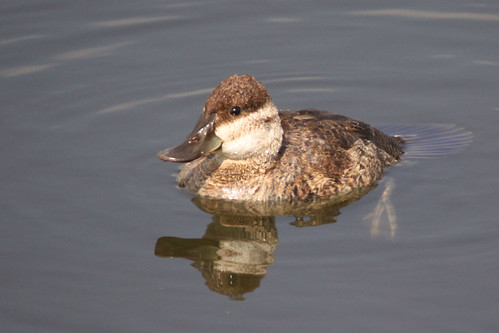
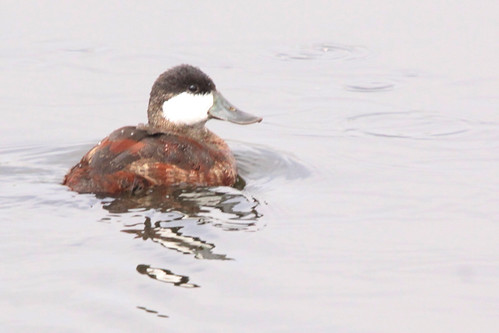 The stiff-tailed ducks (Anatidae: Oxyurini) include some rather distinctive birds, including our local musk duck and blue-billed duck. The female's stiff tail can be seen in the top photograph, spread out behind her. The tail can also be raised to a vertical position. Stiff-tailed ducks generally inhabit freshwater lakes and marshes. They are foot-propelled diving birds, and their legs are set far back, making them awkward on land, so they rarely leave the water. They aren't often seen in flight and are believed to travel at night.
 Pied Honeyeater
We drove to Eyre Creek, where the dry season crossing was covered with water and a detour advised. We paused to take a swim in the crisply cold water and to watch the fairy martins flying in and out of their mud nests, then turned back a few kms to one of the channels where a larger flat area was available for camping. In the next swale a billabong was filled with water so we had the best of both worlds.
A square-tailed kite was nesting, and honeyeaters were feeding on the emu bushes. A promising sunset ended up not delivering the colours I'd hoped for, so I opted for an early night and and early rise. On packing up in the morning we drove over to the billabong, where we found water birds, raptors and/or bush birds occupying every ecological niche. It was great to see pink-eared ducks in such numbers, and to find two different species of dotterel. The sight of a tern surprised those of us who had always associated them with the beach.
The detour around Eyre Creek had us driving alongside the water for much of the way, with several stops as we saw birds in the trees, or glimpsed action on the water's surface.
Bird list:
Pink-eared Duck
Pied Honeyeater
Chirruping Wedgebill
Cinnamon Quail Thrush
Crimson Chat
Orange Chat
Crested Pigeon
Diamond Dove
Budgerigar
Zebra Finch
Pacific Heron
Great Egret
Masked Woodswallow
Horsefield's Bronze Cuckoo
Galah
Little Corella
Hardhead
Grey Teal
Yellow-billed Spoonbill
Square-tailed Kite
Red-Kneed Dotterel
Black-fronted Dotterel
Little Black Cormorant
Caspian Tern
Australian Pipit
White-plumed Honeyeater
Fairy Martin
Willie Wagtail
Magpie Lark
Australian Kestrel
Australasian Magpie

.jpg)
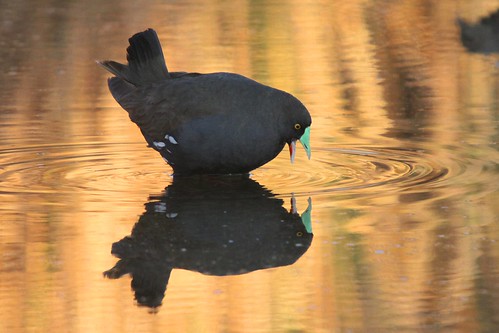
The Blue Bills have been displaying too far out in the dam for me to get a photo, but Alwyn had better luck. The bird here has been flicking water overhimself with his bill. He then swims with his bill pressed to his breast.


