 |
| Brown Treecreeper |
The shrubs around our picnic table however brought in a good number of bush birds.
 |
| Striated Pardalote |
 |
| White-plumed Honeyeater |
|
| Brown Treecreeper |
|
| Striated Pardalote |
|
| White-plumed Honeyeater |
 |
| Red-backed Kingfisher |
 |
| Little Corella |
 |
| Rainbow Lorikeet |
 |
| Comb-crested Jacana |
 |
| Grey-crowned Babbler |
 |
| Apostlebirds |
 |
| Blue-faced Honeyeater |
 |
| Cockatiel |
 |
| Spiny-cheeked Honeyeater |
 |
| Brown Honeyeater |
 |
| Brown Quail |
 |
| Emu |
 |
| White-necked Heron |
 |
| Jacky Winter |
 |
| Masked Woodswallow |
 |
| Brolga |
 |
| Galah |
 |
| White-plumed Honeyeater |
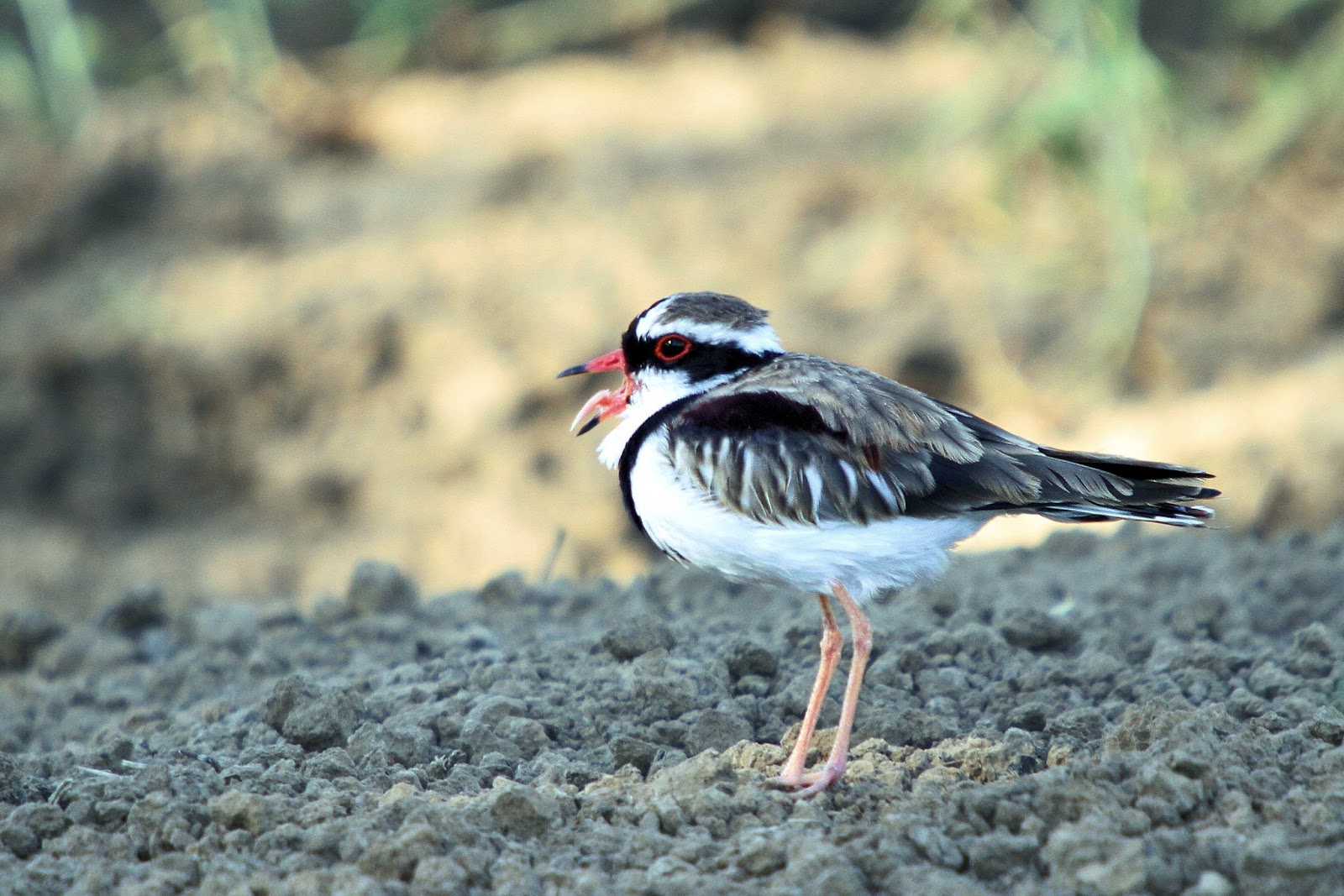 |
| Black-fronted Dotterel |
 |
| Crested Pigeon |
 |
| Apostlebird |
 |
| Black-faced Woodswallow |
 |
| Diamond Dove |
 |
| White-plumed Honeyeater |
 |
| Zebra Finch |
 |
| Galah |
 |
| White-breasted Woodswallow |
 |
| Dusky Woodswallow |
 |
| Leaden Flycatcher |
 |
| Jacky Winter |
 |
| Brown-headed Honeyeater |
 |
| Sunset |
 |
| Noisy Miner |
 |
| Red-rumped Parrot |
 |
| Eastern Rosella |

Double-barred Finch
Avisford Nature Reserve is on the south west corner of Mudgee, with new housing developments moving closer every day. Accessed via Waterworks Road, it covers an area of 2,437 hectares and includes Redbank Creek Dam, which was built in 1899 as a water supply for Mudgee but now does not hold water, apart from a small weir pond at the entrance.
Avisford Nature Reserve protects areas of relatively high ridgelands typified by steep
sloping gullies and hills with open forest and woodlands. These ridgelands provide habitat for diverse fauna and flora populations. The Reserve contains the Capertee stringybark, a tree with a limited geographical range, and seven animal species listed as vulnerable.
A comprehensive fauna survey was completed by the NPWS during July 2002. The area is a particularly diverse refuge for avifauna with the NPWS Atlas of NSW Wildlife listing 161 diurnal bird species as being recorded either in the Reserve or within 10 kilometres of the Reserve. Species from the families Acanthizidae (scrub wrens, thornbills and warblers) and Muscicapidae (flycatchers, robins and allies) are most common and include the Whitebrowed Scrub Wren (Sericornis frontalis), Weebill (Smicrornis brevirostris), Speckled Warbler (Pyrrholaemus sagittatus) and Jacky Winter (Microeca leucophaea). These species tend to frequent moister and more open lower slope or gully forests (white box – apple box alluvial or blue leaved stringybark open forest sites). The honeyeaters (family Meliphagidae) are another particularly diverse group frequently recorded within the Reserve and include the White-eared Honeyeater (Lichenostomus leucotis), Eastern Spinebill (Acanthorhynchus tenuirostris) and White-naped Honeyeater (Melithreptus lunatus). Nocturnal bird species including the Southern Boobook (Ninox boobook) and Powerful Owl (Ninox strenua) are also present in the Reserve.
No dogs allowed, so we made a couple of short visits in the cool of the morning and evening when we could leave the dogs in the car. On arrival in the late afternoon a group of Glossy Black Cockatoos flew over screeching. Double-barred finches and Red-browed Finches enjoyed the last of the sun, Superb Fairywren and White-browed Scrub Wrens twittered from the undergrowth. A young Grey Butcherbird practiced its vocalisations. It took us a moment to identify a Common Blackbird, an ‘undocumented immigrant’ that we don’t see often around our way. Noisy Friarbirds, Eastern Spinebills and White-naped Honeyeaters represented the Meliphagidae.

White-naped Honeyeater
Next morning we were greeted by the call of a Fan-tailed Cuckoo. The tiny birds were out in abundance: Silvereyes, Red-browed and Double-barred Finches, Striated Thornbills and the Fairywrens and Scrubwrens.

Walking along the creek bed, I had a Spotted Pardalote fly out of a burrow almost at my head. It perched glaring at me until I moved away. A number of Red Wattlebirds played a noisy game, and Pied Currawongs swooped and called through the upper branches. Rufous Whistlers added their song to the mix.

A pair of Galahs worked at enlarging a hole.
It will be interesting to see how the reserve develops under National Parks administration. At the moment it is fairly overrun by feral animals: rabbits, goats and foxes are common. In the middle of the year someone cut down over one-hundred trees in the reserve. But it is safe from leashed dogs.

Rylstone Weir is a large lake on the Cudgegong River that supplies water to
Rylstone and Kandos. The track to the weir is on the northeastern edge of Rylstone. From central Rylstone, take Louee St to the north edge of town just before the bridge. Turn right into Dabee St, then left into Tongbong St which turns right and becomes Rylstone Dam Rd. Take this to the top of the rise and park along the side of the road near the locked gate. The pedestrian gate gives access to the track that winds up to the weir, and continues on to the headland on the far side.
A pair of raptors were circling and calling in the distance, and White-Browed Scrub Wrens and Superb Fairywrens scolded from the scrub. Rabbits broke from cover as we passed, and Wombat scat littered the path.
On the near side of the lake thick reeds and high grass made it difficult to see birds close by, but out on the water were Great Crested Grebe, Musk Duck, Darter, Black Swan, Little Pied Cormorant, Little Black Cormorant, Great Cormorant, Purple Swamphen, Eurasian Coot, Maned Duck and Pacific Black Duck. Reed Warblers could be heard, but not seen.
Tree Martins and Welcome Swallows buzzed the water in a search for insects.


Paddling across the stream in bare feet, we headed up the hill where we were more on a level with the treetops. There were many White-plumed Honeyeaters, one tending a neatly woven nest.
Eastern Yellow Robin were also plentiful, and similarly seemed to be tending nests in the low shrubs.

A Brown Treecreeper circled the tree trunks.

In the distance a Little Eagle soared, harried by smaller birds, but never coming close.
Birds that we saw, but only managed record shots, or no shots at all were an Azure Kingfisher, a flash of blue over the river; a pair of Sacred Kingfishers investigating a hollow high in a dead tree, an Olive-Backed Oriole resting briefly in high branches; two White-browed Babblers who called from within the blackberries before fleeing to the far side of the fence line; a Fuscous Honeyeater hawking for insects; Willie Wagtails; Noisy Miners; White-bellied Cuckoo-Shrike and Black-Faced Cuckoo-Shrike; Rufous Whistler; Laughing Kookaburra; Crested Pigeon; Grey Shrike-thrush; Australian Magpie; Magpie-lark; and Peaceful Dove.

I have done a number of day trips with Follow That Bird which I have always thoroughly enjoyed. Well organised, the trips take in the best spots for the time of year, and with knowledgeable guides and an interesting bunch of people a great day’s birding is guaranteed. We were picked up by the bus at Killara after a foggy drive for me down the F3. But as we waited the fog started to lift. I was a little chastened to realise that we all immediately recognised each other as birders: a certain age, wearing muted colours, sensible shoes and a shady hat – even with the bins slung around necks or suspended from high tech harnesses.
Yesterday our destination was the Blue Mountains to observe the autumn honeyeater migration.
On the way out of town we saw the usual urban birds:

First stop was Wilson Park in Wentworth Falls, the trailhead for the Charles Darwin Walk. Here we picked up our guide Carol Probets, an acknowledged expert in the birds of the region. From the park we also had good views of the migrating birds heading up the valley and pausing to rest on the dead trees. The fact that the birds migrate during the day and at tree-top level make them a relatively easy spectacle to observe.
The majority of the birds are Yellow-faced Honeyeaters. As I wrote in the Wikipedia article on the species, while there are resident populations of the Yellow-faced Honeyeater throughout its range, it is for the most part a seasonal, latitudinal, daytime migrant. During the autumn (March to May) it migrates north along the highlands and coastal fringe of eastern Australia to southern Queensland, to return in the spring (August to October) of the same year. The birds commonly move in flocks of 10 to 100 birds, but occasionally in larger groups of up to 1,000 or more birds. They move in successive flocks at a rate of up to several thousand birds an hour. Near Hastings Point in New South Wales over 100,000 passed through in a single day.
The species is able to detect geomagnetic fields and uses them to navigate while migrating. Experiments where the vertical component of the magnetic field was reversed indicate that the magnetic compass of the Yellow-faced Honeyeater is based on the inclination of the field lines and not on polarity, distinguishing between the direction of the equator and the poles, rather than north and south. While their flight is in one general direction, it is not in a straight line as the flocks stay in vegetated areas, negotiate gaps in the mountain ranges and detour around cities.
The migration of many birds in Australia, including honeyeaters, has generally been described as occurring mainly in response to external environmental stimuli, such as food availability or an influx of water. However, the Yellow-faced Honeyeater has been found to have a broad range of characteristics which are consistent with the adaptations of Northern Hemisphere migrants to their mobile lifestyle: an annual cycle of migratory restlessness; seasonally appropriate orientation based on magnetic, solar and polarised light cues; and a migration program based on the magnetic inclination compass.

We stopped for morning tea at Katoomba Falls Reserve. While the contact call of the Yellow-faced Honeyeater was with us almost continuously, also flying overhead were:
Young Red Wattlebirds fended for themselves in the trees around our picnic spot.

Other birds we observed over our tea cups were:

The honeyeaters are channelled into narrow flyways by the peaks and valleys of the Blue Mountains – one of the narrowest of which is at Narrowneck. The bus parked before the Golden Stairs and we walked along the track towards the locked gate at the top of the rise. Highlights here were:


Last stop for the day for lunch and a walk was Govetts Leap. BIrds came to us as we ate our sandwiches:


Walking out along the loop track brought close-up looks at:


and:


All round a great day.

