 |
| Red-backed Kingfisher |
 |
| Little Corella |
 |
| Rainbow Lorikeet |
 |
| Comb-crested Jacana |
 |
| Grey-crowned Babbler |
 |
| Apostlebirds |
 |
| Blue-faced Honeyeater |
|
| Red-backed Kingfisher |
|
| Little Corella |
|
| Rainbow Lorikeet |
|
| Comb-crested Jacana |
|
| Grey-crowned Babbler |
|
| Apostlebirds |
|
| Blue-faced Honeyeater |
 |
| Cockatiel |
 |
| Spiny-cheeked Honeyeater |
 |
| Brown Honeyeater |
 |
| Brown Quail |
 |
| Emu |
 |
| White-necked Heron |
 |
| Jacky Winter |
 |
| Masked Woodswallow |
 |
| Brolga |
 |
| Galah |
 |
| White-plumed Honeyeater |
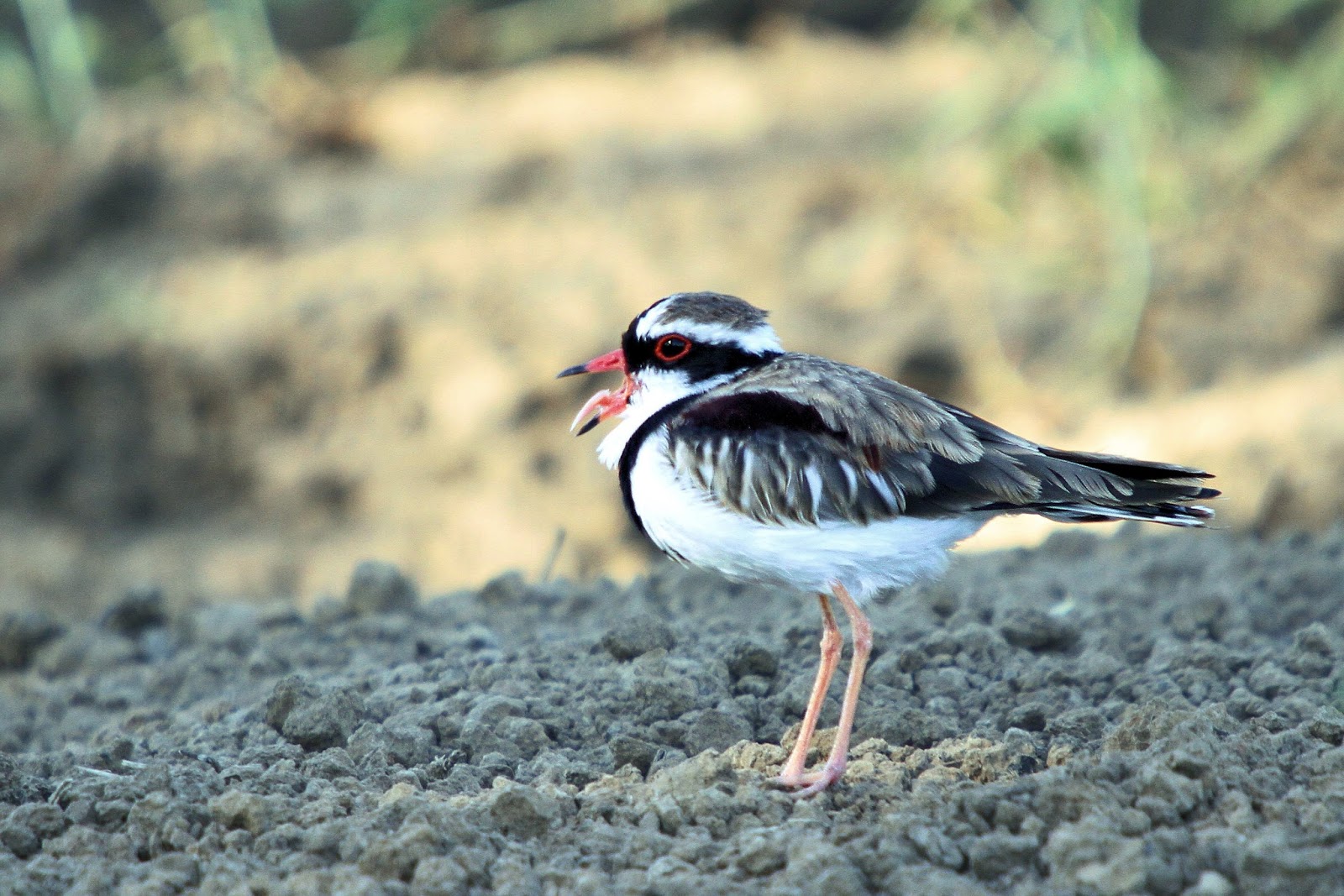 |
| Black-fronted Dotterel |

 |
| Pale Headed Rosella |
 |
| White-breasted Woodswallow |
 |
| Little Corellas, Sulphur-crested Cockatoos and Galahs |
 |
| Zebra and Plum-headed Finch |
 |
| Australian Pipit |
 |
| Spotted Harrier |
 |
| Red-rumped Parrot |
 |
| Black-winged Kite |
 |
| Sunset |
 |
| Noisy Miner |
 |
| Red-rumped Parrot |
 |
| Eastern Rosella |


The travelling stock route and reserves network (TSR network) in New South Wales and Queensland is an extensive network of public land that was established for the droving of sheep and cattle during early European colonisation, often along traditional Aboriginal pathways through the landscape. Travelling stock routes are roads along which livestock can legally be driven, and usually have wide verges on which cattle can graze. Travelling stock reserves include stock routes as well as fenced areas for camping with or watering stock overnight. Because TSRs have remained publicly owned and generally have not been cleared, many protect remnants of woodland vegetation in the otherwise highly-cleared wheat and sheep farming belts.
The administration of NSW TSRs is complex, and differs between the geographic divisions of the state. In the west the TSRs are leased by private landholders with the condition that they provide access to travelling stock. In the east the Livestock Health and Pest Authorities currently oversee management, the collection of rates and the movement of stock, and are under increasing pressure to provide a clear economic case for the value of TSRs under their care. A range of uses are permitted including picnicking and walking, but this varies from reserve to reserve. There is a concern that some TSRs may be sold to neighbouring land holders, leading to the further break-up of the TSR network, loss of access for current users and the probable loss of key network functions. The TSR Network also faces a range of other threats, including overgrazing, invasive species, firewood collection, and mining.
Travelling Stock Reserves, with remnant vegetation and permanent water, play an important role in protecting bird species whose habitat has been reduced by broad scale farming.
Declining songbirds of the NSW sheep-wheat belt:
Brown Treecreeper Climacteris picumnus
Speckled Warbler Chthonicola sagittata
Chestnut-rumped Thornbill Acanthiza uropygialis
Southern Whiteface Aphelocephala leucopsis
Grey-crowned Babbler Pomatostomus temporalis
White-browed Babbler Pomatostomus superciliosus
Varied Sittella Daphoenositta chrysoptera
Crested Shrike-tit Falcunculus frontatus
Rufous Whistler Pachycephala rufiventris
Crested Bellbird Oreoica gutteralis
Restless Flycatcher Myiagra inquieta
Jacky Winter Microeca fascinans
Red-capped Robin Petroica goodenovii
Hooded Robin Melanodryas cucullata
Eastern Yellow Robin Eopsaltria australis
Diamond Firetail Stagonopleura guttata
To get to Travelling Stock Reserve #21 head out of Mudgee towards Gulgong on the Castlereagh Highway. Pass Cullenbone Lane on the left and the TSR is on the right 0.7km further on, just before the crest of a hill. Driving over the crest there is a driveway on the left where you can safely turn to come back to the gate. Close the gate as there may be stock in the reserve. The track down to the river is rough but easily negotiated in 2WD.

Striated Pardalote

Eastern Rosellas

Red-Browed Finch

Sulphur-Crested Cockatoos

Surrounding Area

While backyard bird feeders are a well established garden addition in the northern hemisphere, here in Australia we are generally discouraged from providing food for wild birds, other than through growing bird attracting plants.
Among the arguments against backyard feeders are:
However I do put out food on occasion for the Rainbow Lorikeets. I buy wild-bird nectar and also put out grapes, watermelon and other soft fruit. Generally I only do so if the birds gather in my trees of a morning, and often I won’t see them for weeks so I assume there is plentiful nectar and pollen in the area. The are the clowns of the bird world, and it is great to see them in in the garden. Eventually my shrubs will have grown to where they can provide all the birds’ needs.
We have had a week of very heavy rain, and this morning there was a huge flock waiting when I went outside, so I put out some thick nectar porridge and a selection of grapes and blueberries.


It was raining solidly as we skirted Adventure Bay, but we pulled over to check out the memorial at the spot where Captain Cook landed. Two Pacific Gulls were also pondering how different things might have been (the Dutch, French and Spanish also ‘discovered’ Australia). The garden across the road was a riot of cottage plants and New Holland Honeyeaters were taking advantage of the nectar on offer. Baby birds were demanding their share from the shrubs on the other side of the road.


As we watched the honeyeaters a group of parrots flew into the beach-side trees and pushing our way through the wet undergrowth we came across a group of feasting Green Rosellas. Not sure what the plant is, but it certainly occupied the Rosellas, and we were able to watch for some time and leave them still munching.

The sun came out so we made our way down to the beach, where a sign warned us of nesting Hooded Plovers. There were White-face Heron perched on an abandoned boat and European Starling pecking at flotsam. A fenced off area announced that that section of beach was reserved for the Hooded Plover, but either the plovers had not read the sign, or they didn’t appreciate the gesture.


Another heavy shower sent us to the nearby Bruny Island Berry Farm where we were able to while away the time working through the menu: berry coulis and fresh yoghurt, scones with home-made jam and cream, toasted focaccia filled with local smoked salmon and Tasmanian brie, and mixed berries in champagne jelly. Tasmanian Native Hens scratched around on the sodden lawn. A movement in a blackberry bush turned out to be an introduced Greenfinch.


