|
| Sunrise, Nyngan |
I was lucky enough to score second place in the
Birding NSW 2012 photography competition, winning a place on the
Outback Track Easter with the Birds tour to
Trilby Station. Outback Track arrange custom tours for groups - an example of which is the birding focused Easter trip in conjunction with Birding NSW - as well as a choice of itineraries. Trilby Station is near the village of Louth, 125 km south of Bourke on the Darling River Run. Literally 'the back o' Bourke'.
We started assembling at coach bay five at
Central Station soon after 7:00 am on 27th March, easily recognizing other tour members. We were all outfitted by
Kathmandu or
BCF, and clutched bulging bags that demonstrated not-entirely-successful attempts to travel light. We met Charlie, our bird guide, Mike, our driver and tour leader, and Heather, chef and support vehicle operator, and piled on the bus. We rumbled up to the Blue Mountains to collect the last passengers, and ticked off city birds through the windows. We stopped at the Orange Botanic Gardens for a short bird-watching walk and lunch. By the time we arrived in Nyngan our thoughts were only of showers and dinner at the RSL, but the first day bird list ticked good numbers of parrots including Long-billed Corella and Yellow-tailed Black Cockatoos, and a range of thornbills and honeyeaters.
Early breakfast in Nyngan was followed by a walk to the Bogan River. Spotted Bowerbirds perched on tv aerials, Grey-crowned Babblers babbled, and Blue-faced Honeyeaters and Yellow-throated Miners shared a powerline.
 |
| Grey-crowned Babbler |
Back in the bus, there was a system of everyone moving one seat anti-clockwise, ostensibly as a social mixer and to share around the good and bad seats - but so many people didn't get the system that it added a challenge to boarding the bus. We arrived at Trilby Station in time for a late lunch and a wander around the homestead area. Most of the group were accommodated in the Shearers Quarters, I was to be one of the campers on the lawn, but when Jenny and I discovered that the Overseer's Cottage was available after a late cancellation, we quickly upgraded to the luxury of our own bathroom and kitchen, and a porch looking out over the river. From the porch we could watch the Brown Treecreepers, Ring-necked Parrot, and Apostlebirds in the trees around the chicken coop. The Shearers Quarters also had close encounters with a Spotted Bowerbird flying into the showerblock, and having to be caught and released outdoors.
 |
| Apostlebird |
 |
| Brown Treecreeper |
 |
| Ring-neck Parrot |
Next day we went to Toorale Nationale Park, created in 2010 despite
significant protest against taking the historic Toorale Station out of agricultural production
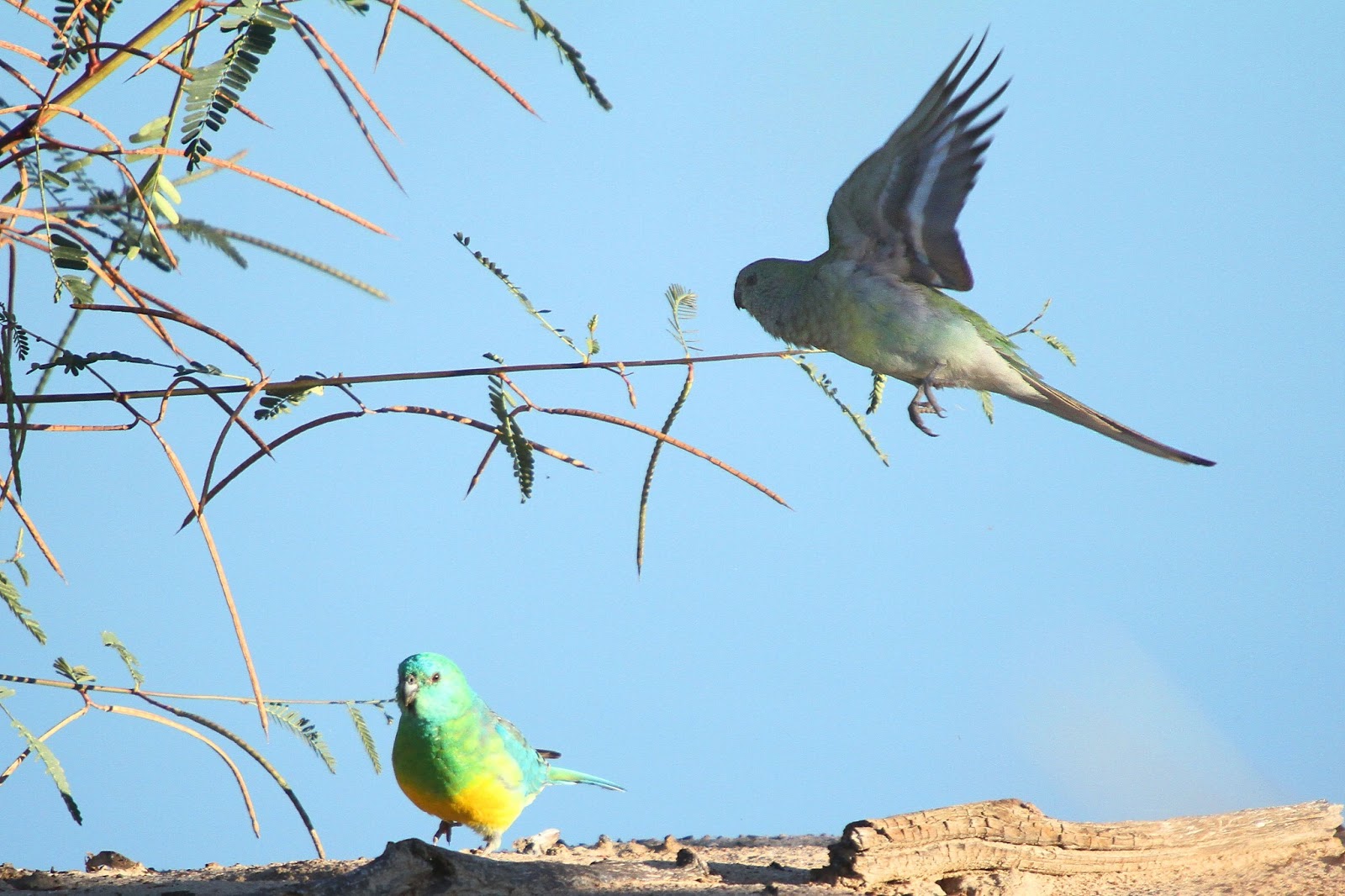
. The primary motivation for the takeover was to end the impact of the station's irrigation entitlement on the parched Murray-Darling basin. The state and federal governments bought Toorale for nearly $24 million to return about 20 gigalitres of water a year to the environment. National Parks photographers captured Toorale when the floodplains were inundated last year, but it was a different story when we visited with the Warrego River drying up into muddy pools. The pools that remained provided gathering points for birds, with good numbers of woodswallows, finches, and parrots. A highlight for those who managed a glimpse was a Shy Heathwren. Emus and Wedge-tailed Eagles were common, and welcome sightings for city birders. We were the first visitors to the park, with the first public tour offered on 30th March. Lunch was on the banks of the Darling River which was running strongly - we ate under spreading Coolibah Trees. We stopped in Louth on the way home where a large group of Red-winged Parrots were feeding on a local shrub.
 |
| Our group |
 |
| Dentella minutissima - endangered matting plant. |
 |
| Big skies |
 |
| Tortoise leaving a drying pool |
 |
| Welcome Swallows |
 |
| Goats were bogged in the muddy margins - this one able to be rescued |
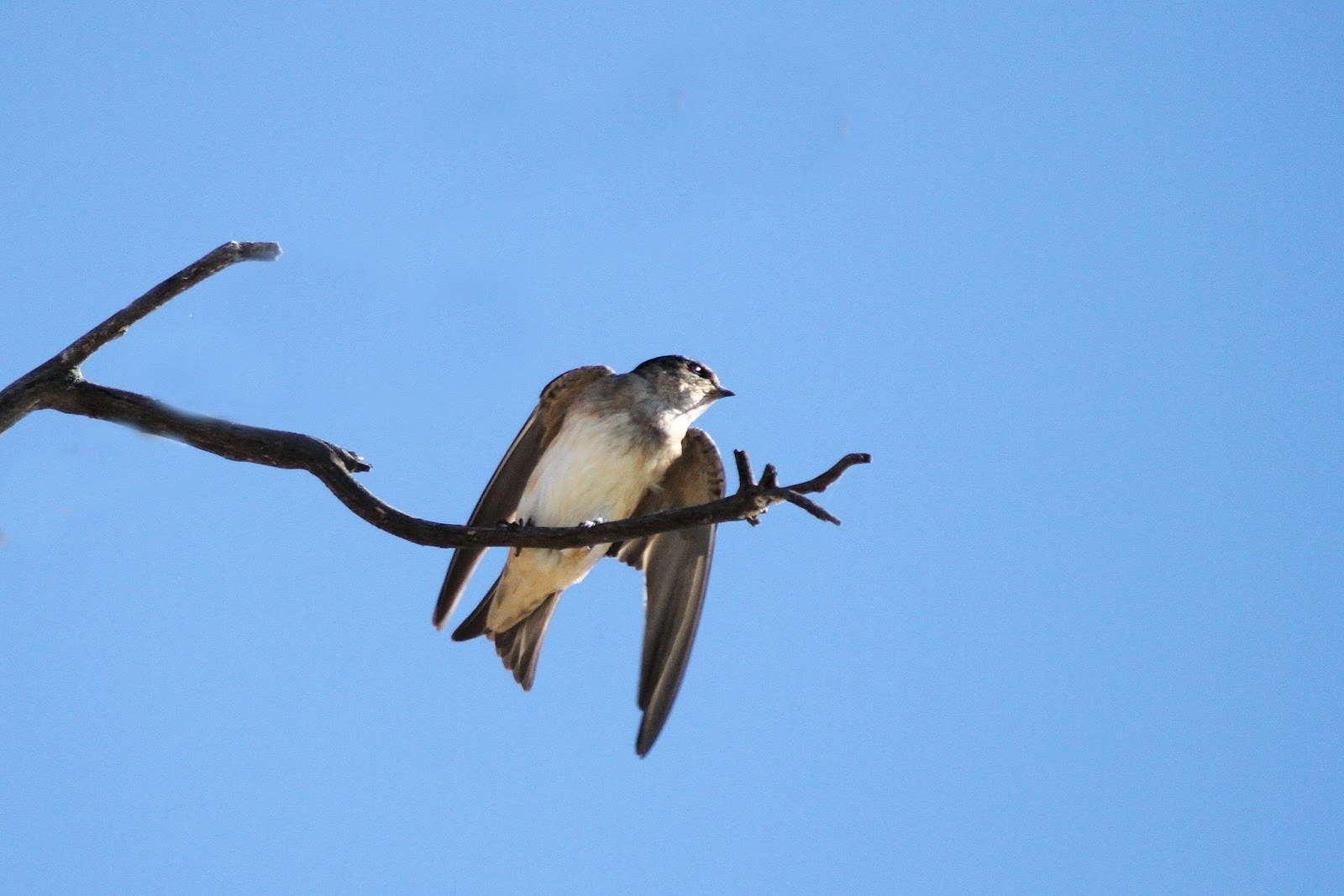
Next day we had a little sleep-in and did our birding on Trilby Station, a walk around the billabong and along the Darling River in the morning, and a drive around some of the station bores and earth tanks in the afternoon. There were good birds to be seen, though not ideal conditions for photography as the route we chose meant we were walking into the sun. Near the billabong we came across a Brown Goshawk that had taken a Crested Pigeon, and was being harassed by other birds. It flew off but was unable to fly high or far, and stopped to rest frequently. It eventually abandoned its prey under a concerted attack by Pied Butcherbirds. The bore at the number 5 gate was a rare oasis of green, and a little bird haven, with Hoary Headed and Australasian Grebes, Pink Eared Ducks, Mulga Parrots and Singing and Spiny-cheeked Honeyeaters added to our list.
 |
| Brown Goshawk with a Crested Pigeon |
 |
| Tree Martin |
 |
| Weebill |
 |
| Restless Flycatcher |
 |
| Mulga Parrot |
 |
| Singing Honeyeater |
 |
| Wedge-tailed Eagle nest |
 |
Pink-eared Duck
Day five was another bus trip - this time to Gundabooka National Park. But I woke up with a cold so self-medicated myself into a semi-comatose state and stayed behind to do a couple of short walks followed by long naps. I watched a Crested Shrike Tit searching for insects, which was a new bird for the Trilby list so I was pleased with that.
Day five we stopped in Bourke, Mike pointing out some of the historic buildings and giving a potted history of the architecture and culture, and then driving up to the top of Mount Oxley - a mesa rising 150 metres above the Western Plains - for lunch. From the top we had good views of a Peregrine Falcon and several Wedge-tails hunting the cliffs.
Then on to Warren, arriving just one hour before the only open food source was due to close. Mike agreed to a detour that would take us along the edge of the Macquarie Marshes so we had birds all along the route, including large flocks of Cockatiels.
Water was very low at the Warren ponds, but we saw good numbers of ducks and grebes, Black-fronted and Red-kneed Dotterel, and a number of raptors, alongside Silvereyes, White-plumed Honeyeaters, and Red-rumped Parrots.
The trip home was quiet, it had been a very full week.
|