I have published my blog entries as a Blurb book - not that this is necessarily what you'll be getting for Christmas, family and friends.
I have published my blog entries as a Blurb book - not that this is necessarily what you'll be getting for Christmas, family and friends.
 Black-chinned Honeyeater (Wilpinjong)
 Painted Honeyeater (Wilpinjong)
 Diamond Firetail (Baerami)
Some of the notable spots are Munghorn Gap with over 160 species recorded including the endangered regent honeyeater; the Drip, home to the origma or rock warbler; the White Box Camp in Goulburn River National Park for painted honeyeaters; and Stony Creek for diamond firetails. We found great birds all along the Wollar Road with a group of seven wedge-tailed eagles roosting on the edge of mine tailings, a variety of honeyeaters along the creek beds, musk lorikeets feeding on flowering gums, and rufous whistlers calling from every vantage point. The area is also home to the only wild emus in the Sydney basin.


 After yesterday's scorching temperatures were promised to be repeated today, we walked early. Lots of little birds singing pre-dawn, cisticolas and fairywrens, finches, scrub wrens, and of course house sparrows.

 Formally regarded as a subspecies of the Great Egret, Ardea alba, the Eastern Great Egret was recently elevated to full species status, Ardea modesta.
  Great Crested Tern, Common Turn
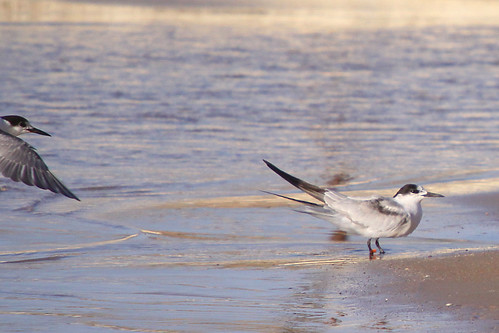 I met up with Maureen and Alwyn early morning at the Newcastle Ocean Baths, the rocks behind which are a popular roost for gulls, terns and the smaller waders. The tide was high and many of the birds had moved to the sands of the wading pool, called the Canoe Pool. This pool has a map of the world on its base, now covered by sand, but old photos show the pool jammed with small boys in canoes circumnavigating the world.


Chapman, G., The Social Life of the Apostlebird Struthidea cinerea Emu. Vol. 98, no. 3, pp. 178-183. Sep 1998.

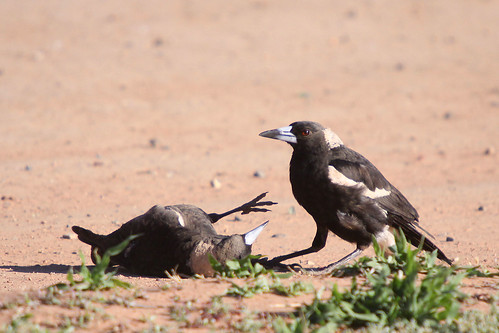 Originally intending to drive on to Cobar, we stopped at Nyngan to check birds in the riverside park. The sun was out, the birds were in abundance, and the next-door, dog-welcoming caravan park beckoned. We pitched our tents beside the river, tired the dogs with a quick fetch/swim game and went for a walk.
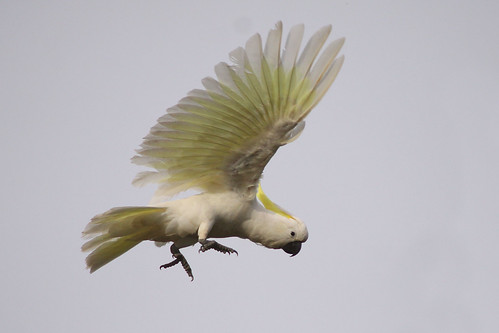 Sulphur-Crested Cockatoo
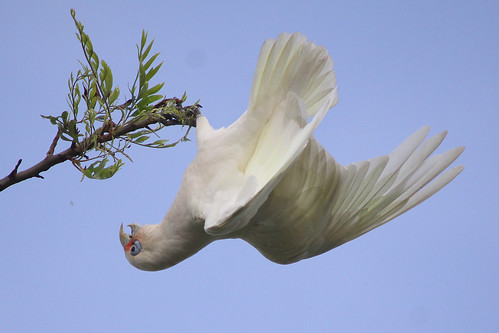 Little Corella
  Galah
Galah 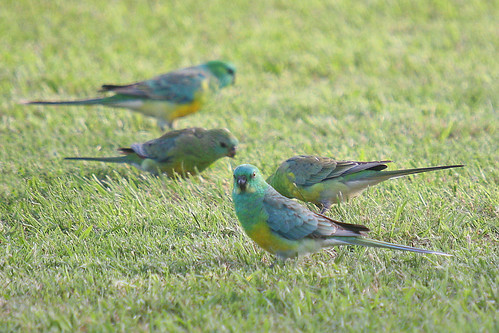 Red-rumped Parrot
 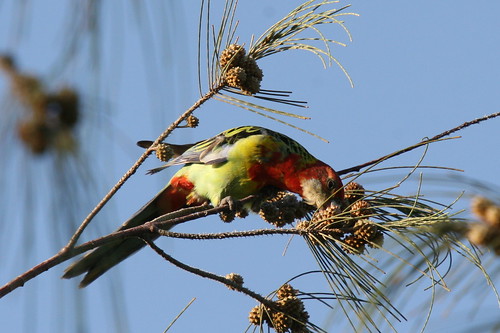 Eastern Rosella
  Rainbow Lorikeet
 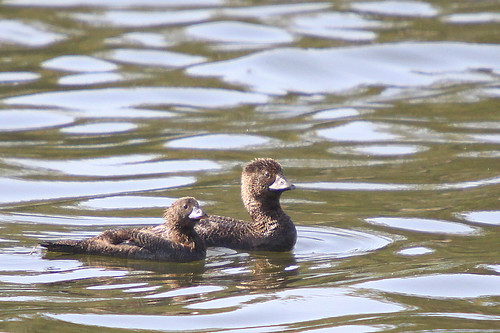 Not a lot is known about Musk Duck's breeding habits. The breeding season varies with rainfall and waterlevels, but is typically between July and January, with the greatest number of clutches laid in September or October. The female chooses a secluded spot and builds a rough nest from trampled reeds, pulling more reeds over the nest to form a canopy. Clutch size is unknown but believed to be around 3 or 4 eggs. In most cases only one chick survives. They hatch already covered in dark brown down and are able to swim straight away, and dive within a few days.
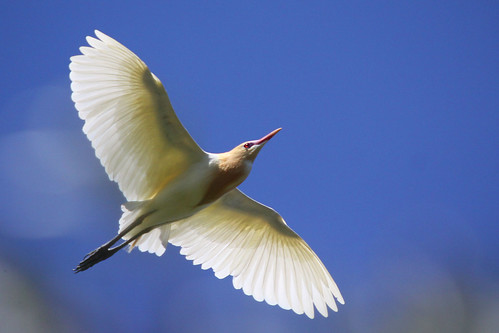 Cattle Egret in breeding plumage